
Serger vs Sewing Machine: What Each Does and Which to Buy
A serger trims, seams and overcasts an edge in one pass; a sewing machine does everything else. What each does, US prices (Oct 2026), and which to buy first.
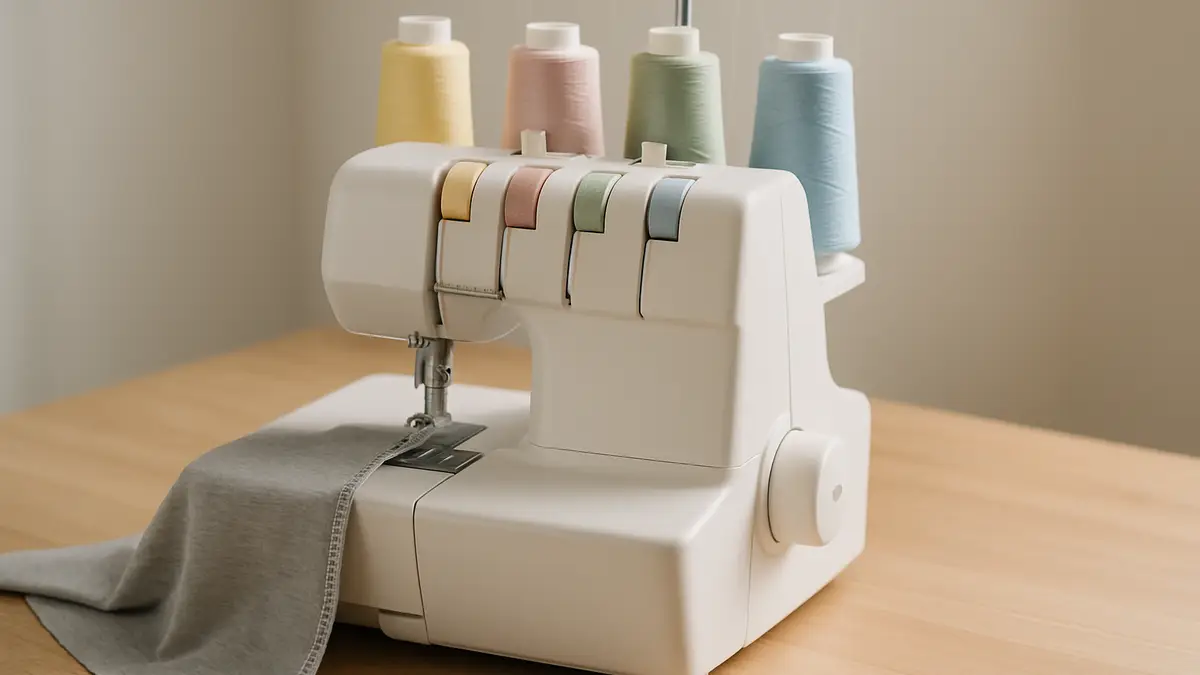
A serger and a sewing machine look like they compete, but they do different jobs. The sewing machine builds the garment; the serger finishes and seams the edges, faster and stretchier than a sewing machine can. The real question is not which one is better but whether your projects need the second machine.
What is the difference between a serger and a sewing machine?
A sewing machine forms a lockstitch: one needle thread interlocks with a bobbin thread inside the fabric, and it can sew anywhere on the fabric. A serger, also called an overlocker, forms an overlock stitch: one or two needle threads plus loopers fed from separate cones wrap the edge, while a knife trims the seam allowance just ahead of the needles. A serger works only on an edge. In exchange it seams, trims and finishes in one pass, and the stitch stretches with knit fabric.
| Sewing machine | Serger (overlocker) | |
|---|---|---|
| Stitch | Lockstitch (needle thread + bobbin) | Overlock (needles + loopers, no bobbin) |
| Threads in use | 2 | Usually 3 or 4 (2 on some models) |
| Trims fabric | No | Yes, with a built-in knife |
| Works away from the edge | Yes | No |
| Stretch on knits | Limited (zigzag or stretch stitch) | Good, especially with differential feed |
| Typical household speed | 750 to 850 spm | 1,300 to 1,500 spm |
| Buttonholes, zippers, topstitching | Yes | No |
What can only a sewing machine do?
Only a sewing machine can sew buttonholes, attach zippers, topstitch, sew darts, stitch seams that do not run along an edge, quilt, and appliqué. Anything that needs a seam in the middle of the fabric, or a stitch that must not cut the fabric, belongs to the sewing machine. That is why it comes first: a serger alone cannot finish a pair of trousers or a bag. Our best sewing machines for beginners list covers the first machine; for thick materials such as canvas and denim, see the heavy-duty sewing machine guide.
What can only a serger do?
Only a serger trims, seams and encloses a raw edge in one pass, which gives the clean, stretchy seams found inside store-bought T-shirts and leggings. It also does a narrow rolled hem for scarves, napkins and chiffon, and gathers or ruffles edges using differential feed. Differential feed means two sets of feed dogs move at different speeds: faster in front gathers or eases stretchy fabric so it does not ripple, slower stretches it slightly to stop puckering on fine fabric. Juki lists a 0.7 to 2.0 differential ratio on its MO-654DE.
What does 2, 3 or 4 thread mean on a serger?
The thread count is how many cones form the stitch, and it decides seam strength and stretch. A 4-thread overlock uses two needles and two loopers and is the standard seam for knit garments because the second needle line adds strength. A 3-thread overlock uses one needle and two loopers; it is lighter and is the usual edge finish on wovens and the base for a rolled hem. A 2-thread stitch uses one needle and one looper for a very light edge finish on fine fabrics, and only some machines offer it: the Juki MO-654DE does 2, 3 or 4 threads, while Brother’s 1034D and 1034DX do 3 or 4.
Which serger should you buy, and what does it cost?
For most home sewists, a 3/4-thread serger with differential feed is enough. These are list prices on the makers’ US sites checked October 6, 2026 (Juki publishes a suggested retail price; dealer prices vary).
| Machine | US price (Oct 2026) | Threads | Max speed | Differential feed | Notes |
|---|---|---|---|---|---|
| Brother 1034DX | $289.99 | 3 or 4 | 1,300 spm | Yes | Color-coded threading guides, 3 feet included, 12.57 lb |
| Brother 1034D | $319.99 | 3 or 4 | 1,300 spm | Yes | 3 to 7 mm stitch width, rolled hem and ribbon lock |
| Juki MO-654DE | $1,399 SRP | 2, 3 or 4 | 1,500 spm | 0.7 to 2.0 ratio | Max stitch length 4 mm, 15.5 lb |
| Brother 2340CV (cover stitch, not a serger) | $579.99 | 3 needles, 1 looper | 1,100 spm | Yes | Cover stitch 3 to 6 mm wide and chain stitch; no knife |
The Brother pair are the common entry point. The Juki adds the 2-thread option and a higher speed. A cover stitch machine like the 2340CV is a third machine for hems, not a serger replacement.
Can a sewing machine fake a serged edge?
Yes, within limits. Many computerized sewing machines include an overcasting stitch and an overcasting foot that wraps thread over the raw edge, and a zigzag or stretch stitch can seam knits. Brother’s HC1850 ($299.99, October 2026), for example, ships with an overcasting foot. The result works and costs nothing extra, but it is slower, needs a separate trim, and is stiffer and less stretchy than a 4-thread overlock. For woven quilting cotton, a sewing machine’s straight seam with pinked or zigzagged edges is perfectly adequate, which is why quilters rarely need a serger.
Which should you buy first?
Buy the sewing machine first. It does every job that a serger cannot, including buttonholes, zippers, quilting and topstitching, and many projects (quilts, bags, home decor, most alterations) never need a serger at all. Add a serger when you sew knit garments regularly, when you want store-quality inside seams, or when finishing edges on the sewing machine has become the slowest part of every project. If quilting is your main hobby, put the money into throat space instead; see our best sewing machines for quilting.
Who does not need a serger?
You do not need a serger if you mainly quilt, make bags and home decor, do occasional mending and hemming, or sew only woven fabrics with finished or enclosed seams (French seams, bound seams, lined projects). You also do not need one before you are comfortable on a sewing machine: threading four cones and adjusting looper tension is easier once machine sewing is routine. If threading the sewing machine itself still takes a few tries, our step-by-step threading guide covers it. Garment sewists working in knits, athleisure and T-shirt jersey are the people a serger pays off for.
Where do these specs and prices come from?
Specs and prices come from the makers’ own product pages checked October 6, 2026: Brother USA for the 1034DX, 1034D, 2340CV and HC1850, and Juki America for the MO-654DE (suggested retail). The thread-count descriptions follow the standard overlock stitch definitions. We have not run hands-on tests on these machines.
Frequently asked questions
Quick answers to what readers ask us most
Can a serger replace a sewing machine?
No. A serger cannot sew buttonholes, insert most zippers, topstitch, or sew a seam away from the fabric edge, because it trims and wraps the edge as it sews. It is a second machine that finishes and seams edges faster.
Can a sewing machine do what a serger does?
Partly. A sewing machine with an overcasting stitch and overcasting foot can wrap a raw edge, and a zigzag or stretch stitch can seam knits. It is slower, does not trim the edge, and the result is less stretchy and less tidy than a true overlock.
What is the difference between a serger and an overlocker?
None. Serger is the usual North American name and overlocker the usual name elsewhere for the same machine: one that cuts the fabric edge with a knife and wraps it in looper threads while seaming.
Is a serger hard to thread?
It takes longer than a sewing machine because each looper has its own path, but color-coded guides help: Brother prints them on the 1034DX. Many sewists tie new threads onto the old ones and pull them through instead of rethreading from scratch.
Does a serger do a cover stitch hem like store-bought T-shirts?
Most standard 3/4-thread sergers do not. That double-row hem comes from a cover stitch machine, such as the Brother 2340CV ($579.99, Oct 2026), or from a combination serger that converts between overlock and cover stitch.