
Sewing Machine Feet Explained: What Each One Does
Sewing machine presser feet explained: what the common feet do, which jobs need a special foot, and how low-shank, high-shank and snap-on fit affect buying.
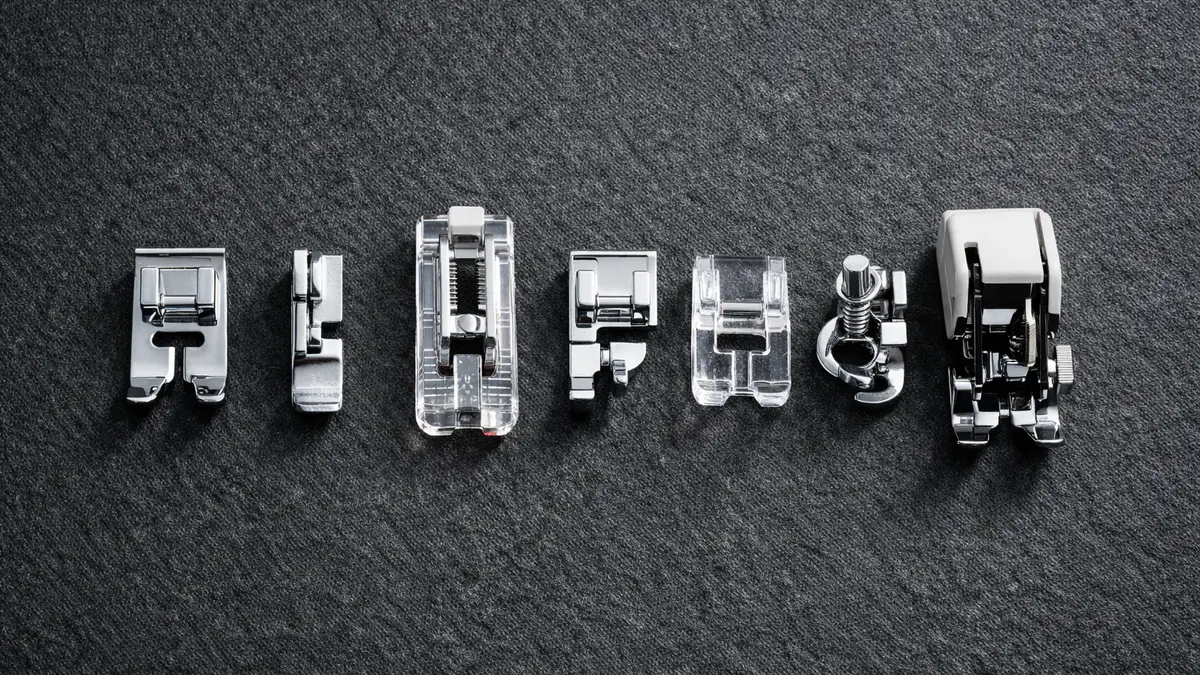
Presser feet are the quiet half of what a sewing machine can do. The machine makes the stitch; the foot decides what the stitch is good for by guiding the fabric. Most machines come with a handful of feet and accept many more. This guide explains what the common ones do and, just as important, which ones will fit your machine.
What do sewing machine feet actually do?
A presser foot holds the fabric against the feed dogs and guides it so a given job comes out even. Swap the foot and the same machine stitches a zipper, a buttonhole or a quilt without you steering freehand. The foot does not change the stitch the needle makes; it changes how the fabric is presented to the needle.
That is why a zipper needs a zipper foot and dense applique needs a satin foot: each shapes the fabric path for that job. Learning which foot a task wants is most of what turns a frustrating seam into an easy one. Our beginner machine guide lists which feet typically ship in the box.
Which sewing machine feet are most common?
These are the feet you meet first, most included with the machine. Match the foot to the job rather than forcing the all-purpose foot to do everything.
| Foot | What it does | Use it for |
|---|---|---|
| All-purpose (zigzag) | General stitching, wide needle hole | Straight and zigzag seams |
| Zipper | Narrow, sits to one side of the needle | Zippers, piping, stitching near a raised edge |
| Buttonhole | Sizes a buttonhole, often one-step with the button | Buttonholes |
| Blind hem | Guides a folded hem for a near-invisible stitch | Hems on trousers, skirts, curtains |
| Overcast (overlock) | Has a pin or bar to stop edge curling | Finishing raw edges without a serger |
| Satin stitch (clear) | Grooved base for dense stitches, see-through | Applique, satin stitch, decorative work |
| Button sewing | Holds a button for the machine to attach | Sewing on flat buttons |
The satin stitch foot matters for anyone doing applique or decorative work, since a flat foot stalls on dense stitching.
Which feet do specific jobs need?
Some jobs are far easier with the right specialty foot, and a few are nearly impossible without it. Buy these as the projects call for them.
- Walking foot (even-feed): feeds top and bottom layers together; essential for quilting through batting and for slippery or stretchy fabric.
- Free-motion or darning foot: lets you drop the feed dogs and move the fabric freely, for free-motion quilting and thread sketching.
- 1/4 inch (quilting) foot: holds an exact quarter-inch seam for patchwork piecing.
- Rolled hem foot: folds a narrow hem as it stitches, for lightweight fabric edges.
- Invisible zipper foot: channels hold the zipper coils open so the seam hides the zipper.
- Gathering foot: gathers fabric as it feeds, for ruffles.
- Cording or piping foot: grooves hold cord or piping in place.
For quilting specifically, the walking foot and 1/4 inch foot are the two that change everything; see our quilting machine guide.
How do you know which feet fit your machine?
Fit depends on the machine’s shank type and how the foot attaches. Get this wrong and the foot physically will not mount, so it is the first thing to check before buying any foot.
| Factor | Options | Notes |
|---|---|---|
| Shank height | Low, high, slant | Low shank is most common on home machines |
| Attachment | Snap-on ankle, or screw-on | Most modern machines use snap-on feet |
| Brand ankle | Machine specific | The ankle that holds the foot is brand specific |
Most current home machines are low-shank with snap-on feet, which is why many generic and cross-brand feet fit them. But high-shank and slant-shank machines, and some industrial and quilting machines, need their own feet. Measure the shank or check the manual, and for specialty machines expect brand-specific parts; see the heavy-duty machine guide for where shank types differ.
How do you change a presser foot?
On a snap-on machine, raise the needle and foot, press the small lever or button behind the ankle to drop the old foot, position the new foot under the ankle, and lower the foot so it snaps on. Raising the needle first keeps you from bending it.
On a screw-on machine, loosen the screw on the shank, swap the whole foot and ankle, and retighten. Always test a new foot slowly by turning the handwheel by hand for the first stitch, to confirm the needle clears the foot before you run the motor. A needle striking the wrong foot can break and is the most common avoidable damage. Our threading guide and tension guide cover the other setup checks.
Which decorative and specialty feet are worth adding?
A handful of feet beyond the basics open up techniques that are hard or impossible freehand. Buy them when a project calls for one, not as a set.
| Foot | What it does | Worth it if you… |
|---|---|---|
| Walking foot | Feeds layers evenly | Quilt, sew knits or slippery fabric |
| Free-motion / darning | Lets you move fabric freely | Free-motion quilt or thread sketch |
| 1/4 inch quilting | Holds an exact quarter-inch seam | Piece patchwork |
| Rolled hem | Folds a narrow hem as it stitches | Hem lightweight fabric edges |
| Pintuck | Sews evenly spaced raised tucks | Make heirloom detail |
| Edge-stitch / stitch-in-the-ditch | Guides a seam along an edge or ditch | Topstitch precisely |
| Cording | Holds cord for couching | Add corded detail |
The walking foot is the one most sewists wish they had bought sooner, because it fixes the shifting layers that cause most quilting and knit frustration. The others are genuinely optional and project-driven.
How many feet does a beginner really need?
Three to start: the all-purpose, zipper and buttonhole feet that come with almost every machine. Those cover seams, zippers and buttonholes, which is the bulk of mending and garment basics. Add feet one at a time as projects demand them rather than buying a large set up front.
The usual first additions are a walking foot and a 1/4 inch foot for anyone moving into quilting, and a blind hem foot for anyone hemming trousers or curtains. A common beginner mistake is buying a 32-piece generic foot kit, then finding half the feet do not fit the machine’s shank or are for techniques they never use. Learn the included feet first, confirm your shank type, then buy quality feet as needed. Starting on the right machine helps; see our beginner machine guide.
Who does not need extra feet?
- Basic menders and hemmers. The all-purpose, zipper and buttonhole feet in the box cover repairs and simple sewing.
- New sewists. Learn the included feet before buying specialty ones; most beginners overbuy feet they never fit.
- Anyone with a high-shank or unusual machine. Do not buy generic feet on price; confirm the shank first or you will own feet that do not fit.
Buy specialty feet when a project needs one, not as a set in advance. The walking foot and 1/4 inch foot are the two most worth adding early if you quilt.
Sources: Presser foot functions and shank types from Brother, Janome and Singer accessory documentation; common low-shank snap-on compatibility; walking foot and free-motion use from quilting education materials.
Frequently asked questions
Quick answers to what readers ask us most
What are the must-have sewing machine feet?
Most machines include the essentials: an all-purpose (zigzag) foot, a zipper foot and a buttonhole foot. Add a walking foot for quilting and layers, a 1/4 inch foot for piecing, and a blind hem foot for hems. Those cover the large majority of home sewing.
Are sewing machine feet universal?
No. Feet fit a machine's shank type: low shank, high shank or slant shank, and either snap on to an ankle or screw on. Most modern home machines are low-shank snap-on, so many feet are cross-brand compatible, but always confirm the shank and attachment for your model.
What is a walking foot used for?
A walking foot, or even-feed foot, feeds the top layer of fabric at the same rate as the feed dogs move the bottom, so layers do not shift. It is used for quilting through batting, matching plaids, and slippery or stretchy fabrics that otherwise creep.
What is the difference between a satin stitch foot and a regular foot?
A satin stitch foot has a groove or channel underneath so dense stitches, like satin and applique, can pass under it without jamming. A clear version also lets you see the stitching line. A regular all-purpose foot has a flatter base and can stall on dense stitching.
Do I need a special foot to sew a zipper?
Yes. A zipper foot is narrow and sits to one side so the needle can stitch right next to the zipper teeth or a raised edge. For invisible zippers, an invisible zipper foot has channels that hold the coils open so you stitch closer still.