
Best Fabric for Machine Embroidery: What Stitches Clean
The best fabrics for machine embroidery and how to handle the hard ones: stable wovens, knits, towels and more, with the stabilizer and needle each one needs.
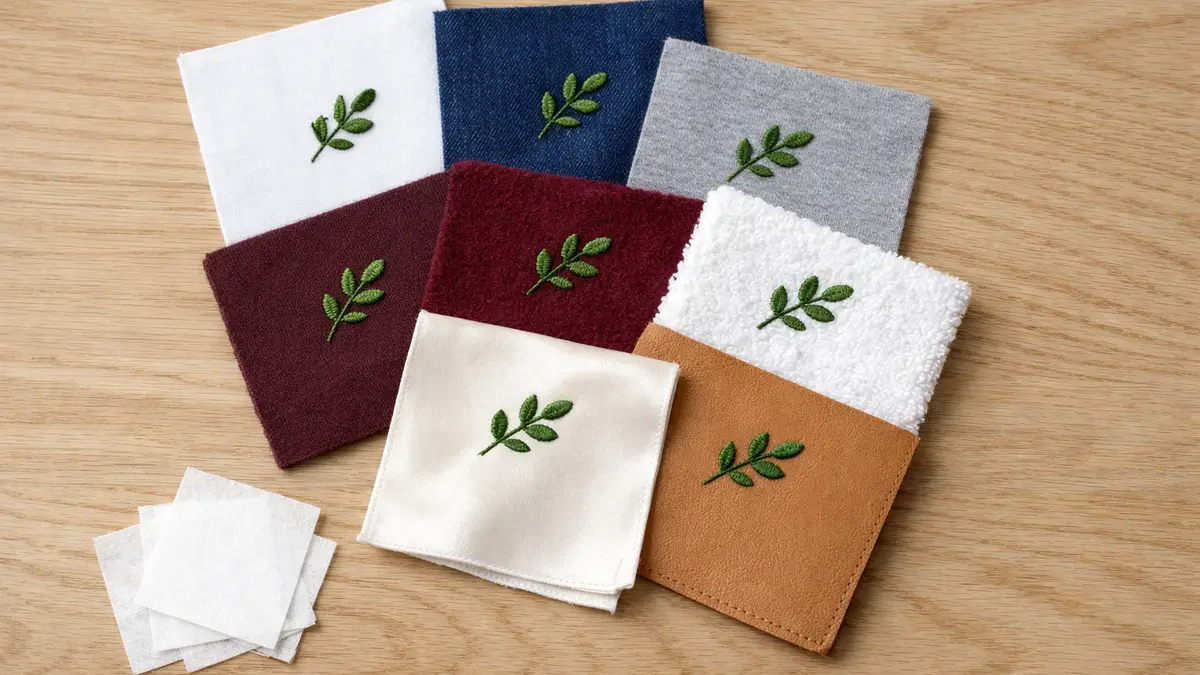
The fabric you stitch on decides more about the result than the machine does. Get the fabric and its stabilizer right and most designs stitch clean; get them wrong and no tension tweak will save it. The key idea is that stability, not fiber, predicts success: a firm weave is forgiving, a stretchy or pile fabric needs specific support.
What is the best fabric for machine embroidery?
Stable, tightly woven fabrics are the best, because they hold the stitches where the machine puts them. Quilting cotton, canvas, twill, denim, linen and medium-weight woven blends all sit flat, hoop cleanly and resist the pull of dense stitching. These are the fabrics to learn on and the safe default for any new design.
Stability matters more than whether the fiber is natural or synthetic. A firm polyester canvas behaves better than a loose cotton gauze. If a fabric stretches, shifts or frays easily, it is harder to embroider, and the fix is always the same: a stabilizer that compensates for what the fabric lacks. Our stabilizer guide is the companion to this page.
Which fabric needs which stabilizer and needle?
Each fabric pairs with a stabilizer, a needle and sometimes a topping. This table is the quick reference; the logic follows underneath.
| Fabric | Stabilizer | Needle | Topping |
|---|---|---|---|
| Quilting cotton, firm woven | Tear-away | 75/11 embroidery | No |
| Denim, canvas, twill | Tear-away or cut-away | 80/12 to 90/14 | No |
| Knit, jersey, t-shirt | Cut-away | 75/11 ballpoint or stretch | Often |
| Towels, terry | Cut-away | 75/11 to 80/12 | Yes (water-soluble) |
| Fleece, corduroy, velvet | Cut-away | 75/11 | Yes |
| Silk, satin, lightweight | Lightweight cut-away or tear-away | 70/10 to 75/11 | No |
| Leather, vinyl | Tear-away, no hooping (float) | Leather or 90/14 | No |
Needle sizing follows the same logic as for sewing; our needle sizes guide explains the numbers and types, and the thread guide covers the 40 weight that pairs with a 75/11.
How do you embroider on knit and stretchy fabric?
Use a cut-away stabilizer, a ballpoint needle, and usually a topping, and hoop taut without stretching. Knit is the fabric beginners struggle with most, and every part of the fix addresses its stretch.
Cut-away stabilizer stays under the stitches permanently and holds the knit stable through washing, where tear-away would let it stretch and sag over time. A ballpoint or stretch needle slips between the knit loops instead of piercing and breaking them. A water-soluble topping keeps stitches from sinking into the surface of a looser knit. Most important, hoop a knit taut but at its natural size, because a stretched knit relaxes after stitching and puckers; see how to hoop fabric.
How do you embroider on towels and pile fabric?
Towels and other pile fabrics need a cut-away stabilizer underneath and a water-soluble topping on top, because the pile swallows stitches. The topping is the part people forget: without it, the stitches sink into the loops of a towel or the nap of fleece and the design looks half-buried.
Lay the water-soluble topping over the fabric before stitching so the stitches rest on the surface, then tear and rinse the remainder away afterward. Thick towels are also awkward to hoop flat, so many embroiderers float them: hoop the stabilizer, spray-baste the towel on top, and stitch a basting outline first. Use a design with open, bold elements rather than fine detail, which disappears into pile.
What about delicate and difficult fabrics?
Light and slippery fabrics pucker, and non-woven materials cannot be hooped, so each gets a specific workaround. These are doable but not beginner fabrics.
- Silk and lightweight wovens: use a light stabilizer and a light, open design; dense stitching puckers thin fabric. A 70/10 needle makes smaller holes.
- Leather and vinyl: do not hoop them, because the ring leaves a permanent mark. Float on hooped tear-away stabilizer and use a leather needle. Every needle hole is permanent, so there is no second try.
- Sheer and loose weaves: back with a firm cut-away or water-soluble mesh, and keep designs light so stitches do not tear the weave.
Test any difficult fabric on a scrap of the same material first. The test tells you whether the stabilizer, needle and design density are right before you risk the real piece.
Does fabric weight matter for design choice?
Yes. Match the design density to the fabric weight, because a heavy design on light fabric puckers and a light design on heavy fabric can look sparse. Dense fill designs belong on medium and heavy stable fabrics; light, open and redwork-style designs suit thin or stretchy fabrics.
If a design is pulling a fabric in, the design is too dense for that fabric, and the honest fix is a lighter design or a firmer stabilizer, not tighter hooping. Choosing designs to suit the fabric is part of planning a project; the beginner guide walks through matching a first design to a first fabric.
How do you test an unknown fabric before committing?
Stitch a test on a scrap of the same fabric with the same stabilizer, needle and design you plan to use. The test is the only reliable way to know how a fabric behaves, and it costs a few minutes and a scrap instead of a ruined project.
Work through it in order: hoop the scrap the way you will hoop the real piece, stitch the design, then release the hoop and look at the relaxed result, not the hooped one. Check for puckering, the design sinking into the surface, the fabric distorting, and the back filling with thread. Adjust one variable, usually the stabilizer or the design density, and retest. For a valuable or one-off item like a finished jacket, test twice if the first test is not clean, because that fabric only gives you one real attempt.
Does fabric color and pattern matter?
Yes, color and pattern affect both show-through and thread choice. A dark design on light fabric can shadow if the fabric is thin, and a light design on dark fabric may need a topping or an extra underlay so the dark fabric does not show between stitches.
- Thin light fabric with a dense dark design: the dark stabilizer or design can shadow through; use a matching or light stabilizer and a lighter design.
- Dark fabric with light thread: add underlay or a topping so the fabric does not peek through the stitches.
- Busy prints: a design can disappear into a busy pattern; choose bold designs and contrasting thread, which the thread guide helps you pick.
Plan the thread colors against the fabric color, not in isolation, and use a topping on any fabric where stitches would otherwise sink or the fabric would show.
Who should not start with their chosen fabric?
- Beginners planning to embroider t-shirts first. Knit is hard; stitch a few firm-cotton designs before you try a shirt.
- Anyone embroidering a one-off valuable item. Leather and silk give no second chance per hole, so practice on scraps of the same material first.
- Projects with fine detail on pile. Fine lines vanish into towels and fleece; pick bold designs or a smoother fabric.
Firm woven cotton forgives almost everything, which is why it is the fabric to learn and troubleshoot on before moving to the harder ones.
Sources: Stabilizer, needle and topping pairings from Madeira and Sulky educational materials and Schmetz needle guidance (ballpoint for knits); common machine embroidery practice for towels (water-soluble topping), knits (cut-away) and leather (floating, leather needle).
Frequently asked questions
Quick answers to what readers ask us most
What is the easiest fabric for machine embroidery?
Quilting cotton and other firm, tightly woven cottons are the easiest. They are stable, hold stitches flat, hoop cleanly and need only a tear-away stabilizer for most designs. Beginners should learn on firm cotton before moving to knits, towels or specialty fabrics.
Can you embroider on stretchy knit fabric?
Yes, with the right support. Knits need a cut-away stabilizer because tear-away does not hold stretch, a ballpoint or stretch needle, and often a water-soluble topping so stitches do not sink. Hoop taut but never stretched, because stretched knit snaps back and puckers the design.
What fabric should beginners avoid at first?
Very stretchy knits, slippery silks, thick towels and leather are the hardest to start on, because each needs specific handling. They are all doable, but learn hooping, stabilizer and tension on firm cotton first so you can tell a fabric problem from a technique problem.
Do you need a topping on any fabric?
Yes, on textured or pile fabrics. A water-soluble topping sits on top of towels, fleece, corduroy and knits so stitches rest on the surface instead of sinking into the pile. It rinses or tears away after stitching and is not needed on smooth, flat fabrics.
How heavy should embroidery fabric be?
Medium-weight, stable fabric carries embroidery best. Very light fabric puckers under dense designs unless the design is light and the stabilizer firm; very heavy fabric is fine but needs a larger needle. Match the design density to the fabric weight.